
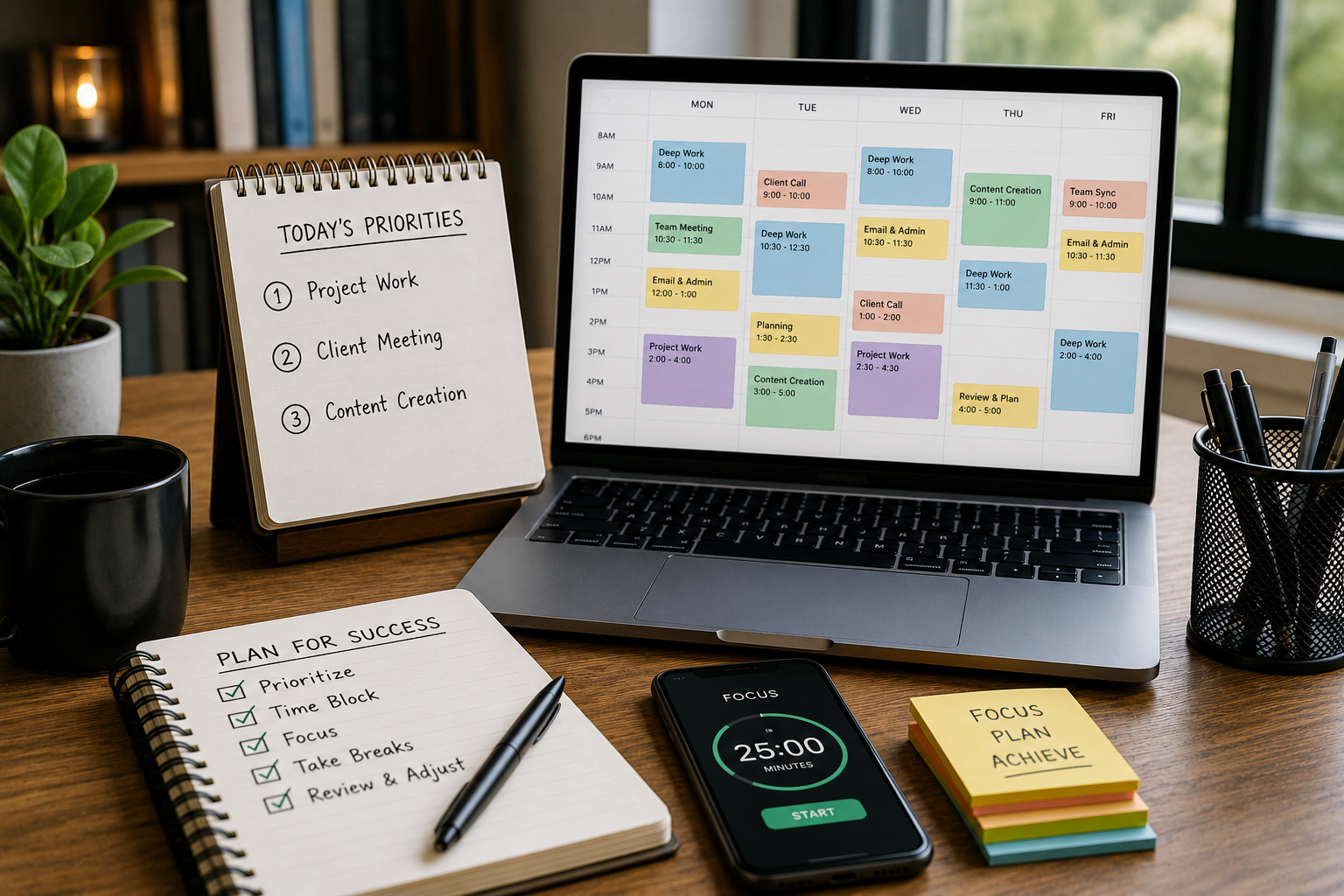
Managing a busy schedule can feel like juggling flaming torches—exciting when it’s working, stressful when one falls. The good news: efficient scheduling isn’t magic. It’s a set of practical, repeatable techniques you can learn and adapt. Below are clear, actionable strategies to help you regain control over time, reduce stress, and get more meaningful work done each day.
Why efficient scheduling matters
A busy schedule isn’t automatically productive. Without structure, tasks expand to fill available time, deadlines sneak up, and important goals get postponed. Efficient scheduling helps you:
- Focus on high-impact tasks.
- Reduce decision fatigue from constant context switching.
- Build predictable routines that boost consistency.
- Create buffer time to handle interruptions without derailing your day.
Core principles to guide every technique
Before diving into specific methods, keep these principles in mind:
- Prioritize outcomes, not busyness.
- Block time for concentrated work.
- Plan with realistic time estimates.
- Protect downtime to avoid burnout.
- Review and adjust weekly.
- Start with a weekly plan (top-down planning)
Why it works: Weekly planning gives a bird’s-eye view of priorities and prevents daily firefighting.
How to do it:
- Pick a consistent planning time (Sunday evening or Monday morning).
- List top 3–5 goals for the week aligned with your major projects or personal priorities.
- Allocate time blocks for those goals across the week, noting fixed commitments (meetings, appointments).
- Add one or two “buffer blocks” for overruns and unexpected tasks.
Tip: Use a single calendar (digital or paper) to avoid double-booking. Color-code categories like “Work,” “Family,” and “Admin.”
- Time blocking (batch similar tasks)
Why it works: Grouping similar tasks reduces context switching and improves focus.
How to do it:
- Divide your day into focused blocks (e.g., 60–90 minutes) for specific task types: deep work, admin, calls, email, creative.
- Schedule the hardest, highest-value work during your peak energy times (morning for morning people, afternoon for others).
- Include short breaks between blocks (5–15 minutes) to reset.
Example blocks: - 8:30–10:00 — Deep work: project development
- 10:15–11:00 — Meetings
- 11:00–12:00 — Emails and admin
- 2:00–3:30 — Creative tasks
Tip: Label blocks clearly in your calendar and set meeting-free blocks for deep work.
- Prioritization frameworks (decide what really matters)
Why it works: Not all tasks deserve equal time. Prioritization ensures you spend energy on the right things.
Techniques:
- Eisenhower Matrix: Classify tasks as Urgent/Important to decide Do, Schedule, Delegate, or Delete.
- Pareto Principle (80/20): Identify the 20% of tasks that produce 80% of results and prioritize them.
- MITs (Most Important Tasks): Each day, choose 1–3 MITs that must be completed.
How to pick MITs: - Ask: Which tasks, if done, will move my projects forward or relieve major stress?
- Schedule MITs early, when willpower and energy are higher.
- Use the “Two-Minute Rule” and task batching for small tasks
Why it works: Small tasks can clutter your day. Quick decisions prevent buildup.
How to do it:
- Two-Minute Rule: If a task takes less than two minutes, do it immediately.
- Batch small tasks (emails, quick calls, receipts) into a single short block rather than tackling them throughout the day.
Tip: Reserve a 30-minute slot mid-afternoon for quick admin tasks so they don’t creep into deep-work blocks.
- Set clear boundaries and protect your calendar
Why it works: Without boundaries, others’ urgencies become your daily agenda.
How to do it:
- Communicate availability: set “office hours” or meeting windows.
- Decline or deflect non-essential meetings. Ask for agendas and outcomes before accepting.
- Use calendar features: block “Focus Time” and set your status to avoid interruptions.
Example phrases: - “I can meet between 2–4 PM on Tuesday; does that work?” (offers a window rather than full availability)
- “Can you share an agenda? If it’s brief, we can cover it in 15 minutes.”
- Delegate and outsource effectively
Why it works: Delegation multiplies your impact by freeing time for high-value work.
How to do it:
- Identify tasks you must do personally versus those others can handle.
- Create clear instructions and standards when delegating.
- Use tools or services for repetitive work (virtual assistants, automated invoicing, scheduling tools).
Tip: Start by delegating one recurring task. Measure outcomes and refine.
- Plan for interruptions with buffer time
Why it works: Interruptions are inevitable. Buffer time prevents them from derailing your plan.
How to do it:
- Add 10–20% buffer across your daily schedule or insert short gap blocks between meetings.
- Use the “15-minute rule”: schedule meetings to end 15 minutes early so you have transition time.
- Keep a small “parking lot” list for non-urgent interruptions to capture ideas without immediate action.
- Use technology wisely—tools that help (not distract)
Why it works: The right tools streamline scheduling, reminders, and collaboration.
Recommended tool types:
- Calendar app with time-blocking and integrations (Google Calendar, Outlook).
- Task managers that support hierarchies and deadlines (Todoist, Asana, Notion).
- Focus apps that minimize distraction (Forest, Focus@Will, website blockers).
- Automation tools (Zapier, Make) to reduce repetitive manual tasks.
Guideline: Limit the number of tools to avoid app fatigue—choose a core calendar + one task manager.
- Time estimation and the Pomodoro Technique
Why it works: Accurate time estimates make planning realistic; Pomodoro boosts focus and momentum.
How to do it:
- Break tasks into chunks and estimate how long each will take. Add 20–30% extra time for unknowns.
- Use Pomodoro: 25 minutes focused work, 5-minute break; after four cycles, take a longer break (15–30 minutes).
Benefits: increased sustained focus, clear break structure, easy progress tracking.
- Review and reflect weekly (continuous improvement)
Why it works: Regular reflection helps you spot bottlenecks and improve scheduling habits.
How to do it:
- Weekly review (15–30 minutes): check completed tasks, update priorities, capture lessons, and plan next week.
- Ask these questions: What worked? What didn’t? What will I change next week?
- Keep a notepad or digital log of recurring issues (frequent interruptions, wrong time estimates) and address them systematically.
- Combine personal and professional planning
Why it works: Life tasks spill into work and vice versa. A unified plan reduces clashes.
How to do it:
- Use one calendar for both personal and work events, with private labeling for sensitive items.
- Block family time, exercise, and sleep as non-negotiable calendar events.
- Batch personal errands into single blocks to avoid fragmenting workdays.
- Energy management, not just time management
Why it works: Peak energy windows determine when you’ll be most effective.
How to do it:
- Track when you feel most alert and schedule demanding tasks then.
- Build routines for energy: morning sunlight, short walks, consistent sleep, hydration, and healthy snacks.
- For low-energy times, schedule repetitive or light tasks rather than creative work.
- Smart meeting practices
Why it works: Meetings consume a large portion of modern workdays—make them efficient.
How to do it:
- Require a clear agenda and outcome for every meeting.
- Invite only essential people and keep meetings short (15–30 minutes when possible).
- Start and end on time; assign a facilitator to keep things on track.
Tip: For quick alignment, use async updates (recorded video, shared docs) instead of meetings.
- Use templates and checklists to save decision time
Why it works: Templates standardize processes and speed up recurring tasks.
How to do it:
- Create templates for frequent emails, meeting agendas, project briefs, and content outlines.
- Use checklists for multi-step processes (onboarding, launch steps) to avoid omissions.
- Store templates in a central place (shared drive or project tool).
- Fight procrastination with commitment devices
Why it works: External constraints help when motivation dips.
How to do it:
- Public commitments: tell a colleague or friend you’ll complete a task by a set time.
- Financial or social stakes: use tools (Beeminder-style) that penalize missed commitments.
- Micro-rewards: promise yourself a small break or treat after finishing an MIT.
- Keep a “Not To Do” list
Why it works: Saying yes to everything steals time from what matters.
How to do it:
- Write down tasks, habits, and activities you will avoid (e.g., doomscrolling, non-essential meetings).
- Review the list weekly and update it as priorities change.
- Visualize your day with morning planning
Why it works: A quick morning plan reduces reactive decisions and sets intention.
How to do it:
- Spend 5–10 minutes each morning reviewing the day’s blocks and confirming your MITs.
- Adjust based on any overnight changes but keep the plan intact where possible.
- End-of-day wind-down and reset
Why it works: A clear shutdown separates work from personal time and improves next-day productivity.
How to do it:
- Spend 10 minutes capturing accomplishments, unfinished tasks, and priorities for tomorrow.
- Clear your workspace and set a next-day starting task to make morning momentum easier.
Common pitfalls and how to avoid them
- Overcommitting: Protect your calendar by saying no and using buffer time.
- Poor estimation: Track actual time spent for a few weeks to improve future estimates.
- Tool overload: Consolidate to a few essential apps and disable redundant notifications.
- Missing energy alignment: Don’t force deep work at energy lows; restructure your day instead.
- Not reviewing: Weekly reflection is the single highest-leverage habit to refine systems.
Quick starter checklist (use this in your first week)
- Choose one calendar and one task manager.
- Do a 30-minute weekly planning session.
- Block two daily deep-work periods aligned to your energy.
- Pick 1–3 MITs each day.
- Insert 10–15% buffer time into your schedule.
- Run a 10-minute daily shutdown and a 5–10-minute morning review.
Building Over Time
Efficient schedule management is a skill you build over time. Start small: implement one or two techniques, measure the difference for a week, and iterate. With consistent tweaks—prioritizing outcomes, protecting focus time, and planning realistically—you’ll find your days less chaotic and more productive.